
This article provides developers with a practical guide to integrating and using APIs, covering everything from selecting instances and setting up accounts and authentication to examples of API calls, monitoring and alerts, as well as explanations of billing. It focuses on practical details and precautions to help you deploy your services quickly and securely on US-based nodes and protect them against attacks such as DDoS.
What level of protection is sufficient for common scenarios?
The needs of different businesses to counter attacks vary greatly. The usual choice yunserver High-security servers in the United States At that time, it should be evaluated based on the peak bandwidth and the number of concurrent connections: For small and medium-sized sites, the commonly used protection bandwidth ranges from 10 to 50 Gbps ; For high-risk businesses such as e-commerce and live streaming, it is recommended to use elastic protection solutions with bandwidth of 50 Gbps or higher, or those that charge based on the amount of traffic generated by attacks. Service providers usually specify the cleaning bandwidth, the number of concurrent cleaning tasks, and the SLA. Please confirm the threshold for initiating cleaning operations and the peak processing capacity before connecting to their services.
Which package or instance is more suitable for developers to use?
When selecting an instance, give priority to the level of protection (Basic/Enhanced/Enterprise), public network bandwidth, and CPU/memory specifications. During the development and testing phases, basic protection can be selected as an option, with the possibility to expand capabilities as needed ; In a production environment, it is recommended to use an enhanced level and combine it with independent IP addresses and multiple BGP exits. If you need persistent, high-concurrency connections, it is recommended to choose instances with 4 cores or more and at least 4–8 GB of memory. Additionally, verify whether the platform supports quick switching between protection policies and allowlist configurations.
How to complete account authentication and get quick access?
The first step in getting started is to register an account on the console and complete the identity verification process. After that, you can apply for an API Key (which usually includes an AccessKey and a Secret) or generate a Token from the console. The access process generally includes:: 1) Bind a domain name/IP address in the console and configure the protection policy ; 2) Direct business traffic through the high-defense exit (either via BGP connection or by modifying the routing at the access point) ; 3) Manage instances using SSH or the control panel. For API authentication, it is recommended to use short-lived tokens or HMAC signatures to prevent the leakage of long-duration plaintext keys.
Where can I find API documentation and example calls?
The official console typically provides complete RESTful API documentation as well as Swagger for online debugging. Common interfaces include:: Instance management, bandwidth adjustment, blocklist/allowlist settings, traffic filtering policies, alarm subscriptions, and log exports. Example call: Use curl with the Authorization header or sign the request body to receive a response in JSON format. For commonly used languages such as Python, Go, and Node, it is advisable to prioritize using official or community-provided SDKs in order to avoid duplicating the same functionality.
Why incorporate anti-DDoS servers into the architecture instead of relying solely on CDN?
CDNs are adept at caching and distributing static content, but when faced with large-scale network layer attacks such as SYN/UDP flooding, or persistent application layer attacks targeting the origin server, CDNs may not be able to fully mitigate these threats or may even end up bearing the additional traffic load. Deployment YunServer American high-defense servers It is possible to directly filter out malicious traffic at the edge of the network, thereby protecting the bandwidth and connection resources of the origin servers. At the same time, combining this with WAF provides more detailed application-layer protection.
How to monitor protection status and respond to attack incidents?
It is recommended to enable real-time traffic monitoring, alerts for abnormal traffic, and log export. Common practices: Integrate protection statistics with syslog/ELK and Prometheus/Grafana, set threshold alerts for bandwidth, packet volume, or number of connections, and configure notifications via SMS, email, or Webhook. In the event of an attack, it is essential to first identify the source of the traffic and the type of protocol involved. Temporarily adjust cleaning rules, rate limits, or block any suspicious IP addresses. At the same time, contact the vendor’s emergency support team to request high-priority assistance.
What costs and billing models should be taken into consideration?
High-security products typically use one of two billing models: basic bandwidth plus scrubbing traffic, or a package based on the peak level of protection required. Key billing considerations include bandwidth limits, additional fees for exceeding the allowed traffic volume, pay-per-hour or pay-per-day flexible protection options, as well as extra costs for additional features such as dedicated IPs, WAF, and log exports. Before connecting, it is necessary to assess the normal peak levels versus the attack peak levels, and select a billing plan that achieves a balance between cost and security.
How to use APIs safely in development and avoid common mistakes?
Developers should follow the principle of least privilege when using APIs: Generate different API Keys for various services and set appropriate permissions and expiration dates for each of them ; Enable double confirmation or approval processes for sensitive operations ; Avoid hard-coding keys in your code; instead, use environment variables or key management services ; It also implements retry throttling and idempotent operations to prevent misjudgments or duplicate payments in high-concurrency scenarios.
- Latest articles
- Key Points For Disaster Recovery Switching And Load Balancing Design For VPS Nodes At The Vietnamese Node In Enterprise-level Architectures
- How To Determine How Much To Rent A VPS In Korea Based On Business Scale And Match Performance Requirements
- Vietnamese CN2 Service Provider: Price And Service Comparison To Help You Choose Quickly
- How Do Enterprises Assess The Time It Takes For Tencent Cloud Singapore Servers To Recover After A Failure?
- Guidance On The Application Of Korean IP Native In SEO And Refined Promotion Operations
- Cross-server StarCraft Battle, Creating A Room, Choosing A Korean Server, Multi-country Player Experience Analysis
- Consider Multi-region Backups: Which Cloud Server In Taiwan Is Recommended With Excellent Disaster Recovery Capabilities?
- From Latency To Throughput, A Comprehensive Assessment Of The Large Bandwidth Advantages Of Hong Kong's Native IPs
- Comparing The Cost-performance Ratio And Technical Specifications Of Taiwanese VPS Cloud Hosts With High-protection Cloud Space
- Before Choosing A Hong Kong High-defense Exemption Server, You Need To Pay Attention To Security And Contract Terms
- Popular tags
-
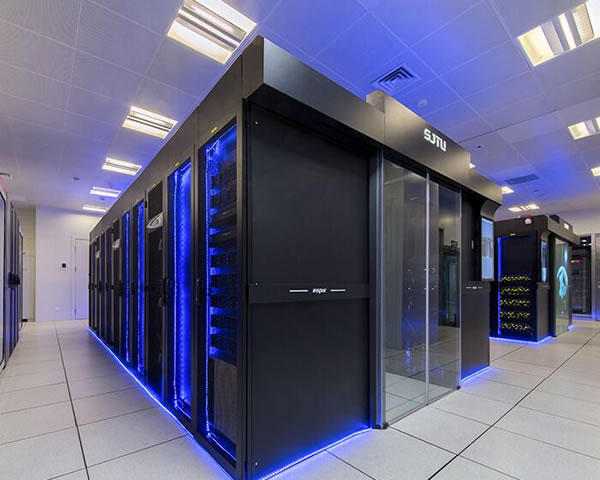
Choose American High-defense And High-speed Servers To Ensure Stable Data Transmission
choose an american high-defense and high-speed server to ensure stable data transmission and understand its importance and selection points. -
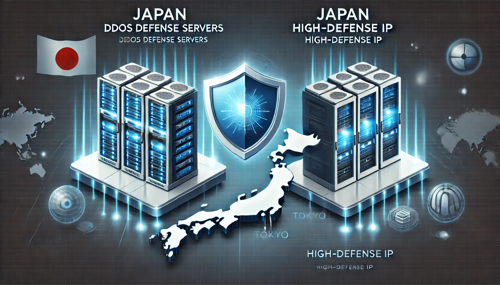
Things To Note And Suggestions When Choosing A Us Server Hoster
things to pay attention to and suggestions when choosing a us server hosting provider to help you choose the right service provider. -

Comparative Analysis Of Purchasing Suggestions And Configurations Of 10 Us Site Group Servers
for site groups and seo needs, compare server types and configurations in us computer rooms, and give purchase suggestions and optimization directions, including key points such as ip, bandwidth, anti-ddos, storage, and operation and maintenance.